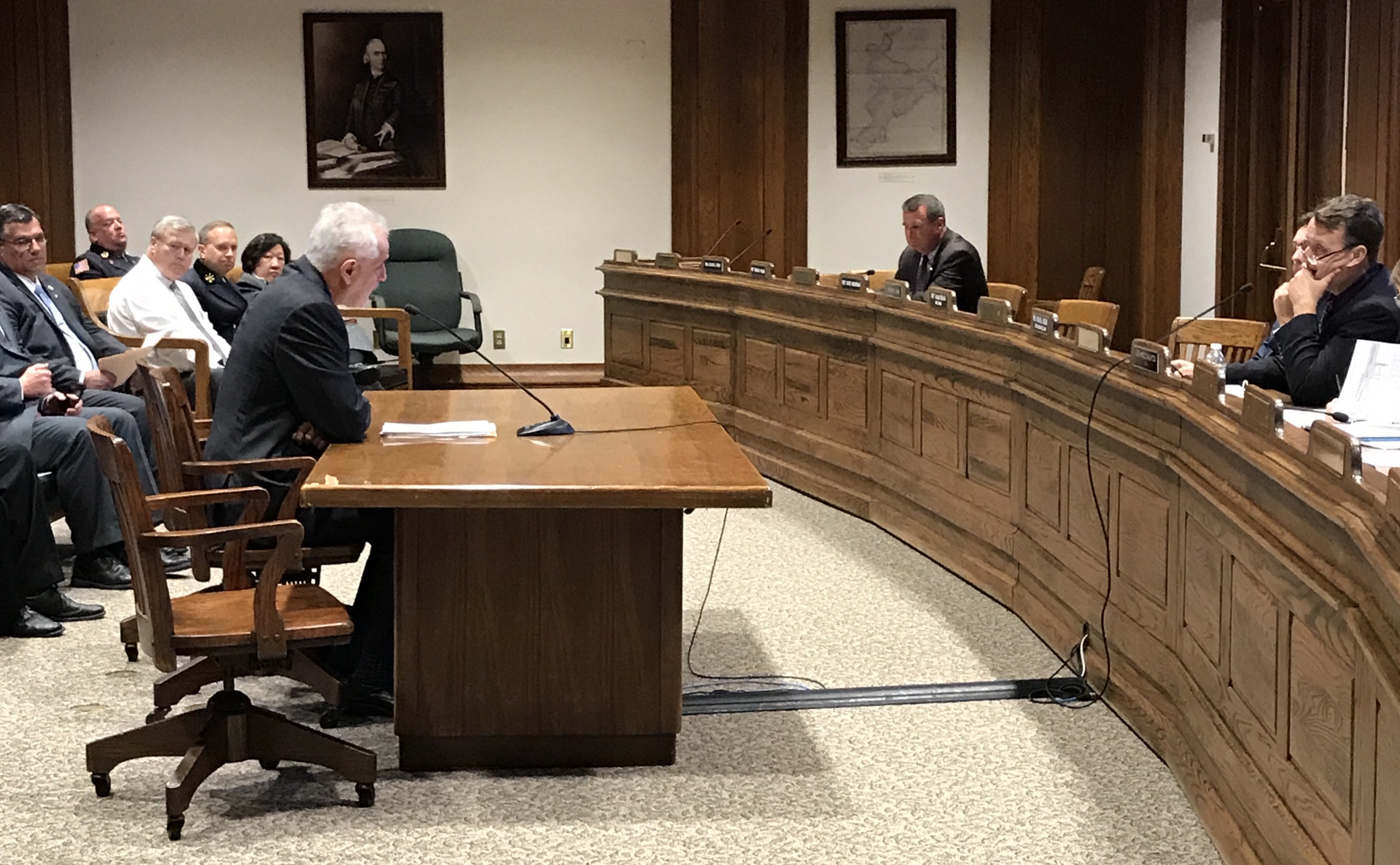
CPCS Deputy Chief Counsel Randy Gioia testified on behalf of CPCS before the Joint Committee on Public Safety and Homeland Security on September 13, 2017, in support of S.1278 – An Act Protecting In-Person Visitation for Inmates, a bill filed by Sen. Michael Barrett (D-3rd Middlesex) in response to Bristol County Sheriff Thomas Hodgson’s plan to replace in-person visitation with video conference visits at two Dartmouth facilities.
In his testimony Atty. Gioia said that CPCS supports the bill because we believe that in-person, face-to-face visits are absolutely essential for the rehabilitation of incarcerated persons and for the well-being of children with parents who are in prison. He stated, “It is notneeded to enhance prison security and may even be harmful to security. It is dehumanizing and detrimental to rehabilitation and impedes the bonding between children and parents.”
He emphasized that the elimination of face-to-face visits in a prison context is bad public policy and likened it to video-conferenced court hearings, calling the committee’s attention to this other negative practice and its unfortunate, adverse effects on our justice system.
The Deputy Chief Counsel went on to highlight other jurisdictions that eliminated face-to-face visits, but later reinstated them because they found video visits did not offer any benefits or improvements to the system. He explained,
Washington, D.C. eliminated face-to-face visits in 2012, and there was push back from family members, the D.C. Bar Association, the American Bar Association, and the Washington Post Editorial Board, which eventually led D.C. to reinstitute face-to-face visits in 2015.
In 2013, Travis County Texas, banned in-person visits and permitted only video visits. A study showed that almost immediately after the ban, the number of assaults in the jail and the number of contraband incidents increased dramatically. Travis County abandoned the video only visit policy. Now, Texas has a law that requires face-to-face visitation.
Atty. Gioia concluded his testimony urging the committee to report the bill out favorably and cautioning, “Video visits can be a supplement to in-person visits, but not a substitute.”