 On June 13, 2017, CPCS Director of the Mental Health Litigation Division Mark Larsen testified before the Joint Committee on Mental Health and Substance Abuse on behalf of CPCS to support H.2406 – Civil Commitment of Mentally Ill Persons to Bridgewater State Hospital. The bill clearly defines that Bridgewater is not a place of detention. G.L. c. 123 § 18 provides that the person in charge of a place of detention may seek the commitment of any inmate to Bridgewater if he feels that the inmate is in need of hospitalization by reason of mental illness. The bill would prohibit Bridgewater from filing petitions seeking the civil commitment of patients to it, but would allow the Medical Director of Bridgewater to file a petition to seek commitment of a patient to the Department of Mental Health (DMH) if that patient no longer has any criminal involvement, either because the his charges were dismissed or he completed his sentence. Director Larsen concluded his testimony urging the committee that “It is time to minimize the use of a prison facility for the treatment of mental illness, even with the hoped-for improvements implemented earlier this year.”
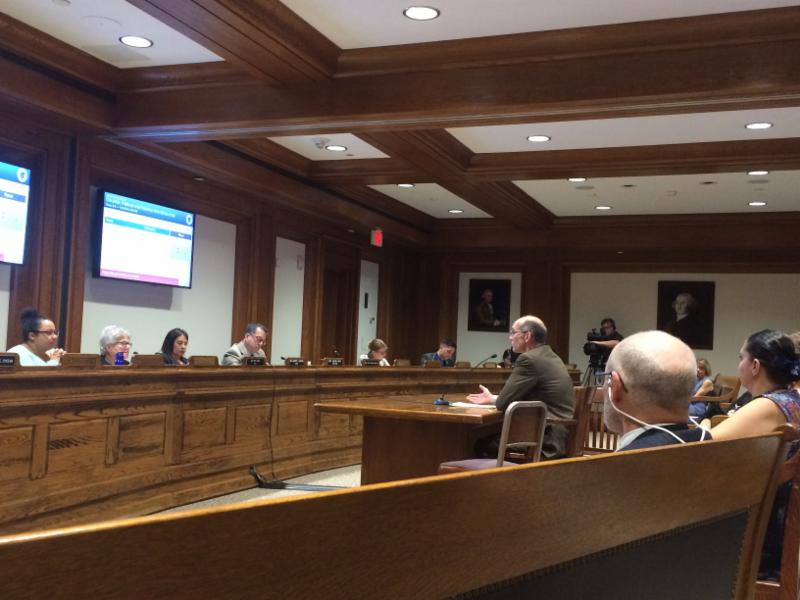 On June 27, 2017, CPCS Deputy Chief Counsel of the Children and Family Law Division (CAFL) Michael Dsida testified before the Joint Committee on Children, Families and Persons with Disabilities on behalf of CPCS in support of H.2800 – Notice to Counsel of Changes in a Child’s or a Young Adult’s Placement and Other Events. The bill would require the Department of Children and Families (DCF) to provide notice of proposed nonemergency changes of placement before and the prompt notice afterwards in the event of an emergency change. It would also require notice of a child’s involvement in criminal, delinquency, or school discipline/expulsion proceedings, and when a 51A report has been filed that implicates a child.
 On July 11, 2017, Director of the Mental Health Litigation Division Mark Larsen again testified on behalf of CPCS before the Joint Committee on Mental Health and Substance Abuse, but this time in opposition to H.1071 and S.1088 – More Timely Treatment of Inpatient Mental Health Treatment and in support of H.2408 – Temporary Involuntary Hospitalizations, which provides that the time an involuntary commitment of a person is initiated must be noted on the application for involuntary hospitalization and that restraint of such person cannot be for more than 12 hours and cannot be renewed. Oftentimes, many individuals who are brought to hospitals under these circumstances are left for hours, sometimes for more than a day, in emergency rooms without any attention. This bill provides an incentive for such persons to be dealt with within a 12 hour period. Director Larsen also asked that the committee act favorably on H.2410 – Holding Commitment Hearings at Court Houses, which amends G.L. § 5, c. 123 to mandate that commitment hearings under this statute be scheduled at court houses, unless a motion by petitioner requests otherwise. Good cause would be the standard to move the hearing to the hospital. Finally, he requested that the committee consider H.2409 – Clarifying that Facilities Shall Advise Clients of Right to Counsel as alternative solutions, which provides that prior to any voluntary commitment the facility must inform the person making the application of his or her right to retain and consult with an attorney or with a person who is working under the supervision of an attorney, and the right to have counsel appointed for him or her if he or she is found to be indigent, pursuant to G.L. c. 211D. He concluded his testimony by informing the committee that H.1071 and S.1088 were not necessary since IMEs are not overused by our attorneys and that the process could be sped up by adopting the other three bills.
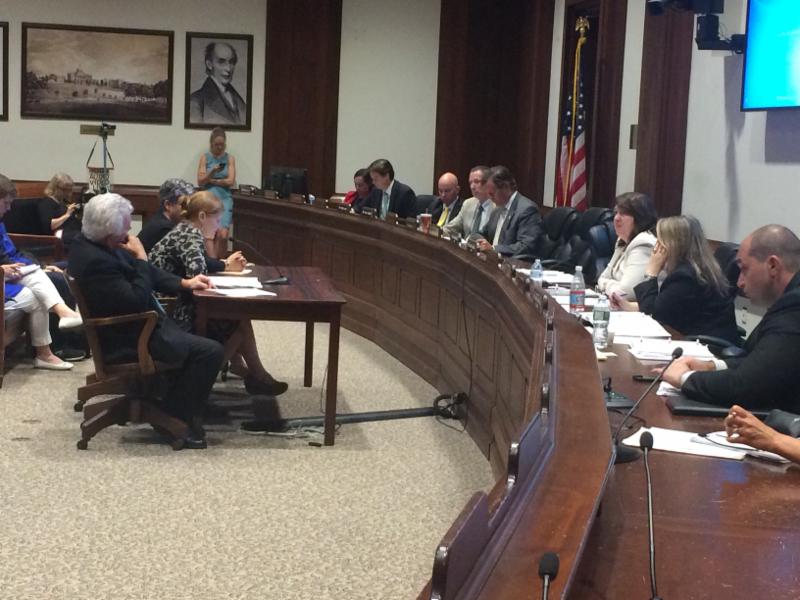 On July 11, 2017, Director of Education Advocacy for the EdLaw Project (YAD) Marlies Spanjaard testified before the Joint Committee on the Judiciary on behalf of CPCS as part of panel supporting S.876, H.819, and H.990 – Decriminalizing Nonviolent and Verbal Student Misconduct. The bills would abolish the charge of Disturbing School Assembly, which has a disparate and harmful impact on low-income children across the Commonwealth, especially children of color and children with disabilities and unnecessarily funnels children into the school to prison pipeline.
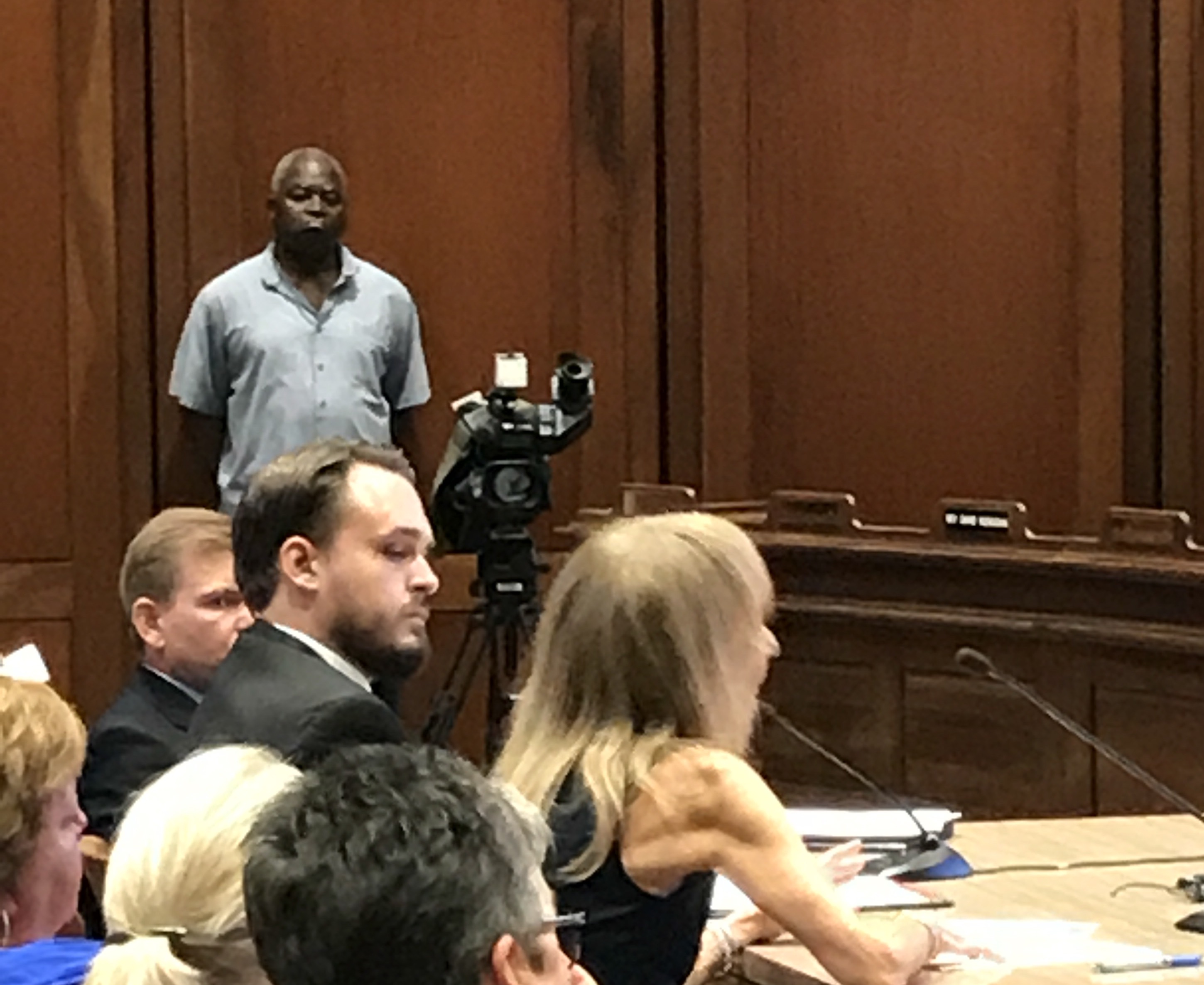 On July 19, 2017, CPCS Innocence Program Staff Attorney Ira Gant and Attorney Anne Goldbach CPCS Forensic Services Director testified before the Joint Committee on Public Safety and Homeland Security on behalf of CPCS as members of a panel in support of S.1285 – Establishment of a Forensic Science Commission. Atty Goldbach told the committee that this is an issue that impacts the integrity of our criminal justice system. She provided brief examples of what constitute improvements, inaccuracies, and problems; explained the need for an independent commission to ensure neutral, objective, accurate, and transparent (NOAT) oversight of how forensic science is employed systemically throughout Massachusetts; informed the committee of the lessons learned from Drug Lab scandals and other recent forensic issues in Massachusetts, and the cost they have had to the Commonwealth with respect to the length of time and the piecemeal litigation that resulted. She closed her testimony by stressing how an independent Forensic Science Commission could address these issues in systemic ways with systemic solutions and that the bill’s enactment would give Massachusetts an opportunity to be a leader. Atty. Gant focused his testimony on the fact that flawed forensic science is not a theoretical problem. He briefly discussed the human cost of cases, including the numbers and statistics of flawed forensics’ role in wrongful convictions and highlighted two Massachusetts cases as examples of the impact and role of flawed forensics. In conclusion, he asked that the committee consider how an independent Forensic Science Commission could help avoid and address these human costs and wrongful convictions. In the wake of DNA exonerations revealing the role of forensic science contributing to wrongful convictions, it is important to have a mechanism for endeavoring to review whole categories of cases once an inaccuracy with a particular methodology is discovered.