Diversity & Inclusion
CPCS is committed to protecting the fundamental constitutional and human rights of its clients by providing zealous advocacy, community-oriented defense, and excellent representation. We are dedicated to building a strong professional relationship with each of our clients, to understanding their diverse circumstances, and to meeting their needs. In striving always to achieve those goals, CPCS embraces diversity and inclusion as core values and is steadfast in our commitment to: (1) ensuring that CPCS staff members represent a broad range of human difference and experience; (2) providing a work climate that is respectful and that supports success; and (3) promoting the dignity and well-being of all staff members. CPCS’s leadership is responsible for ensuring excellence, diversity, and inclusion. Our ability to achieve these goals depends on the efforts of all of us.
We will regularly update this page with articles, event registrations, and other information about diversity initiatives (both inside and outside of the agency).
Diversity and Inclusion (May 2015) Equal Employment Opportunity Plan
—————————————————————————————————————————
CPCS is committed to making diversity and inclusion a permanent part of the culture of the agency and strive to make it a workplace of choice. The agency will strive to create and maintain an inclusive environment in which every person not only has the opportunity to succeed but is provided the support and encouragement to realize their/her/his potential. We will continue to promote professional advancement of diverse and inclusive teams.
From the narrow focus on differences and protected categories such as gender, race, ethnicity, age and physical ability, the definition of diversity is much broader. Diversity now takes on a wider range of aspects and is defined as respecting and valuing differences that include generational differences, educational level, thinking style, level in the agency, seniority, culture, field of work, religion and family composition.
—————————————————————————————————————————
DIVERSITY AND INCLUSION GROUP
The Diversity and Inclusion Group (DIG) is an advisory group at the behest of the Chief Counsel. The group aims to examine how issues of diversity affect our clients and our agency. Our intent is to create a more just and inclusive environment both within our offices for all of our staff and in the Courts in which we practice for our clients. DIG has many goals for the future, both in the short and long-term.
DIG’s current members are secretaries, attorneys, social workers, investigators, and social service advocates from the various CPCS divisions around the Commonwealth. The group is comprised of two subcommittees, Hiring and Training.
DIG is excited to work on numerous initiatives in which we can help improve and expand on current efforts to: (1) foster a more positive and inclusive work environment, (2) increase diversity amongst all levels of CPCS, and (3) foster more education, including in the realm of cultural competency, aimed to better assist in the representation of our clients. Some of the initiatives we have begun work on: collaborating with HR on recruitment efforts, reaching out to local law school affinity groups, organizing Know Your Rights Seminars at local high schools, providing feedback to senior management on the Agency’s hiring guide and EEO plan, working with CPCS training units to further develop trainings and discussions on diversity topics, and providing resources and a network for those in the agency who wish to address disproportionality in the justice system.
You will soon receive a survey on your experiences in your offices and with clients. This survey is aimed to help us identify areas of importance to you both as staff at CPCS and as advocates for the clients of our communities. The purpose is to help us prioritize which areas we need to focus immediate efforts on. DIG will also contribute to the Diversity and Inclusion Intranet page. Be on the lookout for updates regarding mentoring, training, recruiting, and volunteering opportunities in the near future.
We are excited and committed to working on improving our agency and the representation we provide. Please email [email protected] if you are interested in receiving occasional emails from DIG regarding upcoming volunteer, staff recruitment, and training opportunities. Please also feel free to reach out if you are interested in joining DIG or if you have any questions or concerns.
Sincerely,
Anna Kelly (Springfield CAFL) & Silesia Jamison (Springfield CAFL)
DIG Co-Leaders
Aezad Aftab (Salem CAFL) Maili Shaffer (CAFL Appeals)
Training Subcommittee Chair Hiring Subcommittee Chair
M Barusch (Boston Superior)
Beverly Chorbajian (Boston Private Counsel Unit)
Sue Crocker (Barnstable District)
Kareine Durand (Boston CAFL)
Kim Giampietro (Boston District)
Dulcineia Goncalves (Quincy YAD)
Benjamin Evans (Fall River District)
Jennifer Kovacs (Somerville Superior)
Melanie Lister (Boston CAFL)
Amanda Ward (Criminal Defense Training)
Alice Wiseberg (Roxbury Commitment)
DIG Members
———————————————————————————————————————
Recent News:
———————————————————————————————————————


The BBA’s Diversity & Inclusion Section will host Frank Dobbin, Professor of Sociology at Harvard University, for a seminar and discussion on evidence based approaches to diversity management. This approach is discussed in his award-winning article “Why Diversity Programs Fail” published in Harvard Business Review.
After attending this program, firm leaders will better understand the science behind why some common practices intended to promote diversity backfire. Professor Dobbin will introduce attendees to approaches that have a better track record in creating more diverse and inclusive workplaces.
To find out more about this program and to RSVP, click here.
___________________________________________________________________________________________________
Top Three Reasons You Won’t Want to Miss David Wilkins at BBA’s Annual Meeting
There are a lot of reasons to attend the BBA’s Annual Meeting : the chance to hear from new President Carol A. Starkey, meet and mingle with more than 1,000 members of Boston’s legal community, and recognize 20 years of work by our Amicus Committee volunteers.
We also think that topping your list is the opportunity to learn from Professor David Wilkins of Harvard Law School. Here’s why:
- Expand your horizons with one of the world’s most respected legal scholars
Professor Wilkins’ is at the forefront of globalization, lawyers, and emerging economies. Currently, he leads more than 50 researchers tasked with studying the impact of globalization on the market for legal services in rapidly developing countries in Asia, Africa, Latin America and Eastern Europe. He also is directing a nationwide analysis of the modern legal profession, featuring a ten-year, longitudinal study of lawyers’ careers, including the experiences of JD graduates who do not practice law.
- Be inspired by a leading voice on diversity and the law
“His consistency of focus to demonstrate how the legal profession can live up to the highest expectations of inclusiveness is remarkable,” said Renée Landers, professor of law at Suffolk University Law School and past BBA President. “Many attorneys and firms have benefitted from the cogency of his advice and dynamism of his presentations.”
Currently, Professor Wilkins is working on The New Social Engineers , a project charting the historical development and current experiences of black lawyers in corporate law practice. And at Harvard, he founded “The Celebration of Black Alumni,” an annual event to showcase the accomplishments of black Law School graduates and entice them back to campus. Professor Wilkins recognized that low enrollment numbers of black students at the Law School and across the nation was a pressing issue, and called on alumni to pay it forward by personally reaching out to prospective students and encouraging them to enroll.
- Enjoy the opportunity to learn from one of the best
Professor Wilkins is the Lester Kissel Professor of Law, the Vice Dean for Global Initiatives on the Legal Profession, and the Faculty Director of the Center on the Legal Profession and the Center for Lawyers and the Professional Services Industry at Harvard Law School. He has given more than 40 endowed lectures at universities around the world and is a frequent speaker at professional conferences and law firm and corporate retreats.
Professor Wilkins teaches several courses on lawyers including The Legal Profession, Legal Education for the Twenty-First Century, and Challenges of a General Counsel. In 2007, he co-founded Harvard Law School’s Executive Education Program, where he teaches in several courses including Leadership in Law Firms and Leadership in Corporate Counsel.
Still don’t have your ticket? Visit the BBA’s website, or contact Ali Carroll at (617) 778-1932 or [email protected] to reserve your seat today!
—————————————————————————————————————————
There is a discussion underway among the members of NAPD. Click here to learn more. The Racial Justice Committee is just being formed. This particular document comes from a town hall event hosted by the Defender Association of Philadelphia. Join the conversation!
Email: [email protected]
—————————————————————————————————————————
Join us as we celebrate the Summer with Food, Music, Art and Networking at Boston’s premier networking event!
Note: Tickets are Limited & Registration closes on Thursday, July 21 at 5 PM
To register click on this link

—————————————————————————————————————————

#SheSpeaksPower:
Black Women & Girls Speaking To and Through Each Other
We are inviting all Black women and girls to a town hall conversation, #SheSpeaksPower. NEBiP is hosting a meeting with SheWoke! and NoVo Foundation to understand the impact race and other “isms” have in the lives of girls and young women of color. This is an important conversation! To learn more about the event click here.
Boston, MA
DATE & TIME: Saturday, June 18th
Registration at 9:30am
Program 10:00am – 3:00pm
LOCATION: Epiphany School, 154 Centre Street, Dorchester, MA
RSVP
—————————————————————————————————————————

Racial Bias:
Conscious & Unconscious
-Featuring Gina Pruski
FREE WEBINAR
Webinar Description: There is no question—racial and ethnic disparities abound in our criminal justice system. Racial bias, both conscious and unconscious, results in more people of color being stopped, arrested, convicted and imprisoned than ever before. Criminal defense lawyers and public defenders are not immune to bias and, of all people in the system, should be aware of their biases and keep them in check.
To learn more about this webinar and to register click here
—————————————————————————————————————————
 The Benefits of Judicial Diversity
Monday, June 27, 2016 5:00 PM to 7:00 PM
Boston Bar Association – 16 Beacon Street, Boston, MA
Description:
Do judges’ backgrounds affect their decisions? Do judges from different backgrounds decide differently? Or is it accurate, to paraphrase former Justice O’Connor’s famous statement, that a wise female or minority judge will come to the same conclusion as a wise make it white judge? Are there specific types of cases where it makes more or less of a difference? How do women and minority judges experience diversity in the court (or the lack thereof)? And how do litigants and attorneys feel about diversity on the bench? In short, does diversity on the bench matter? And if so, how do we achieve it?
Join us for a presentation and panel discussion that addresses these timely issues.
To learn more about this panel presentation and to register click here
—————————————————————————————————————————

The Kaleidoscope Group invites you to Latino Explosion: Leveraging Latino Cultural Differences to Drive Performance. This one-hour webinar will move participants beyond the business case for addressing the Latino Explosion to the Latino Leadership Model that leverages the CTR (Credibility. Trust. Respect.) approach in understanding, navigating, and ultimately, leveraging Latino cultural values and norms.
To learn more about this free webinar click here
—————————————————————————————————————————

—————————————————————————————————————————


First Parish Concord will host a public forum exploring the struggle for racial justice from 11:30 a.m. to 1 p.m. May 1, 20 Lexington Road, Concord. As part of a continuing conversation about Black Lives Matter, Carl Williams, an ACLU attorney, will describe the differences between the Ferguson Rebellion, the #BlackLivesMatter movement and efforts at police reform. In addition, he will discuss some of the cases that the ACLU is working on to further these struggles for racial justice and share ways to support black and brown people who are pursuing racial justice.
To read the full article click here
—————————————————————————————————————————

YW Boston was proud to host nearly 200 Bostonians at a panel discussion marking Stand Against Racism 2016. Callie Crossley moderated the conversation with panelists Verna Myers and Michael Jeffries, who also fielded audience questions. Here are our top five takeaways from this inspiring and thought provoking event.
To read more click here
—————————————————————————————————————————

—————————————————————————————————————————

MBLA Gala – Mar 24, 2016 – Boston Park Plaza Hotel 6-10pm http://www.massblacklawyers.org/
—————————————————————————————————————————


LBGTQ Annual Dinner – May 6, 2016 – 6-10pm
http://www.masslgbtqbar.org/store.html?event_id=238
—————————————————————————————————————————

CPCS Criminal Defense Training Unit Presents:
Advocating for Transgender Clients
M. Barusch, CPCS Attorney, Boston Superior Court Office & Jason Lydon, founder of Black and Pink
At the core of our role as advocates for indigent people is a commitment to providing client centered representation. How do we best achieve that with our LGBTQ clients who are more likely than straight clients to suffer at the hands of police, court officers and correctional staff? How can we further our client’s interests both in and out of the courtroom?
For more information about the training program, click here.
—————————————————————————————————————————
Implicit Bias: A Primer for Courts
By: Jerry Kang
This Primer was produced as part of the National Campaign to Ensure the Racial and Ethnic Fairness of America’s State Courts. The Campaign seeks to mobilize the significant expertise, experience, and commitment of state court judges and court officers to ensure both the perception and reality of racial and ethnic fairness across the nation’s state courts.
Implicit Bias – Jerry Kang
—————————————————————————————————————————

—————————————————————————————————————————
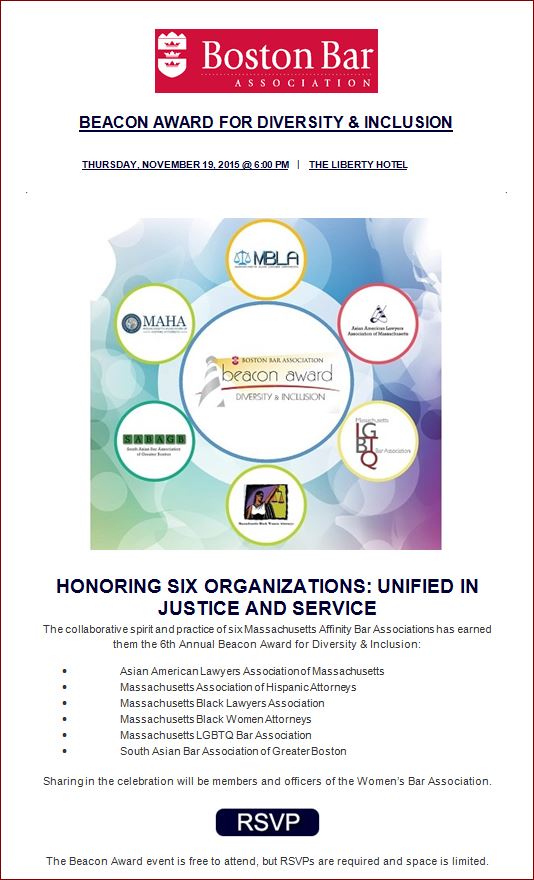
CPCS Employees attend the Boston Bar Association’s Beacon Award Event

On November 19th, 2015, the Boston Bar Association present it’s Beacon Award to the six Massachusetts Affinity Bar Associations above. The award recognizes exceptional leadership in creating a lasting impact and illuminating a new path toward a more diverse and inclusive legal profession.
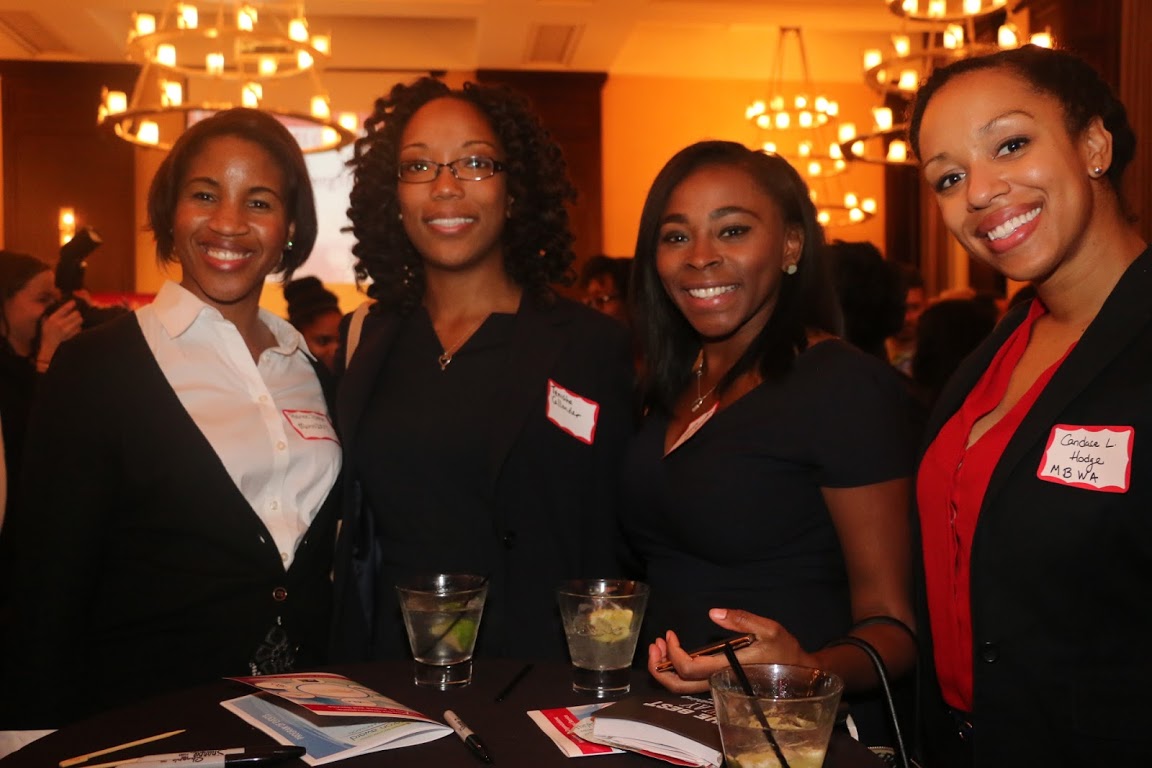
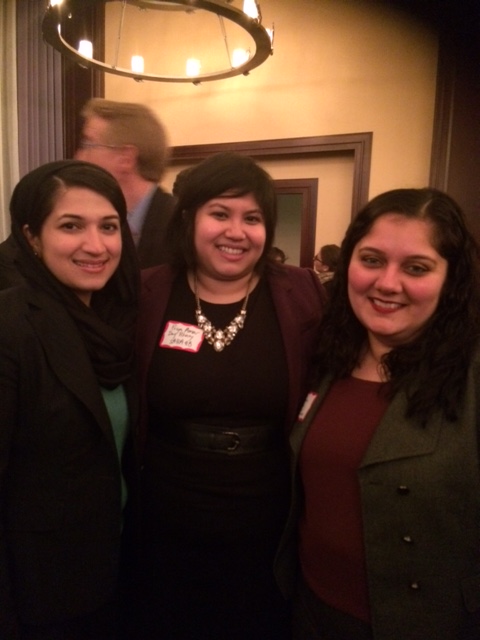
CPCS was fortunate to have employees in attendance at the event, including the Diversity Officer, Legal Hiring Coordinator, and others, including some pictured here.
According to the Boston Bar Association, “these volunteer-led organizations made an impressive impact on Boston’s legal community and the community at large by bringing together attorneys committed to the values of professional excellence, service, and diversity.”[1]
—————————————————————————————————————————
—————————————————————————————————————————
—————————————————————————————————————————
Boston’s Resilience and CPCS
At new attorney orientation this past August, Human Resources aimed to make sure that Diversity and Inclusion were a central tenant of conversation. As part of this effort, we welcomed Dr. Atyia Martin, Boston’s first Chief Resiliency Officer, to discuss her new role with the City and the most vulnerable groups within the city’s population. For us, those groups are frequently our clients.
Dr. Martin now aims to focus on how racism (both historic and present day) affects the city and about how drawing these connections allow for us to strive towards a better vision.
For more information about Dr. Martin and her work, click here.
—————————————————————————————————————————
 In our continued efforts to learn about and promote diversity here at CPCS, the agency’s Diversity Officer attended an Executive Forum about the “Challenging Conversations” organizations experience on the way to becoming more diverse. The forum which was sponsored by Commonwealth Compact, a statewide diversity initiative. Panelists address such questions as:
— Is the workplace culture as open and welcoming as it needs to be?
— Even when we recruit diverse employees, it is often hard to keep them. Why, and what can we do?
— How do we build a more diverse board, and why do we need to?
— Do we handle diversity-related conflict effectively?
— Is it difficult to create the framework for such conversations, and how do you make sure they move forward positively?
Further work and discussion with Commonwealth Compact will continue as we address these topics internally.
—————————————————————————————————————————
—————————————————————————————————————————

Each year, Americans observe National Hispanic Heritage Month from September 15 to
October 15, by celebrating the histories, cultures and contributions of American citizens whose ancestors came from Spain, Mexico, the Caribbean and Central and South America.
The observation started in 1968 as Hispanic Heritage Week under President Lyndon Johnson and was expanded by President Ronald Reagan in 1988 to cover a 30-day period starting on September 15 and ending on October 15. It was enacted into law on August 17, 1988, on the approval of Public Law 100-402. The day of September 15 is significant because it is the anniversary of independence for Latin American countries Costa Rica, El Salvador, Guatemala, Honduras and Nicaragua. In addition, Mexico and Chile celebrate their independence days on September 16 and September18, respectively. Also, Columbus Day or Día de la Raza, which is October 12, falls within this 30 day period.
—————————————————————————————————————————
White Fragility: Why It’s So Hard to Talk to White People About Racism
Dr. Robin DiAngelo, in the article attached below, discusses why race and racism are
uncomfortable topics for white people. Is being racist a conscious decision? Are white people more concerned with being perceived as racist than actually working to correct racial bias and systemic racism? The distinction between individual prejudice and a system of institutionalized racial power, Dr. Angelo professes, is fundamental.
—————————————————————————————————————————

UMass Law’s Career Services Office and its APALSA, BLSA, LALSA, LAW and
OUTLaw Chapters are pleased to announce:
“Pursing Justice Through a Diverse Profession: Legal Departments Leading the Way”
Thursday, October 8, 2015
4:30 to 6:00 pm
At The University of Massachusetts School of Law
Larkin Moot Court Room
Join our Dean, Mary Lu Bilek, for hors d’oeuvres, drinks, and a lively discussion of the goals, obstacles, and pathways to ensuring that our private and public institutions’ lawyers reflect the diverse clientele they serve. Meet our talented students and help them to understand the challenges and the opportunities you faced both on your path to an in-house position and in trying to bring a wider range of viewpoints to the organization’s legal department.
We are excited to invite you to connect with the next generation of diverse lawyers from the Commonwealth’s only public law school. This year, our first-year class is over 40% students of color. Our law students are interested in pursuing justice through both private and public sector careers and can be a part of your organization’s efforts to achieve more creative and comprehensive legal outcomes by improving diversity in its legal team.
As part of our mutual commitment to increasing diversity in the legal profession, we encourage you to provide us with any materials to display on information tables at the event so that interested students can learn more about the important work you do. Although students will be aware that this is not a recruiting program, you should feel free to share with the students volunteer and other internship opportunities at your organizations.
Other members of your organization who would like to attend are also welcome. RSVP by Wednesday, September 30, to Natasha Ostrowski at [email protected] or (508) 985-1165.
—————————————————————————————————————————
Why is diversity important in the legal profession? What does it mean to work in a diverse workplace? I’m already aware of these issues, I’m a public defender!

As part of orientation for the new attorneys joining the agency, HR was joined by Kevin Nolan and Matthew V.P. McTygue, Co-Chairs of the Diversity & Inclusion Section of the Boston Bar Assoication, to discuss why these questions and about what diversity means for us as lawyers and as public defenders at CPCS.
Members of the Boston Bar Association can read more about the presenation here .
—————————————————————————————————————————

To register for this event, please click here.
—————————————————————————————————————————

Color Blind or Color Brave?
The subject of race can be very touchy. As finance executive Mellody Hobson says, it’s a “conversational third rail.” But, she says, that’s exactly why we need to start talking about it. In this engaging, persuasive talk, Hobson makes the case that speaking openly about race — and particularly about diversity in hiring — makes for better businesses and a better society.
Watch the video here.
—————————————————————————————————————————

—————————————————————————————————————————

The mission of the Boston Lawyers Group (BLG) is to support the efforts of its member organizations to identify, recruit, advance and retain attorneys of color. Innovation and collaboration are the key elements of BLG’s foundation. The BLG has been most helpful to CPCS in posting our open attorney vacancies.
For more information about the Boston Lawyers Group, please visit their website.
—————————————————————————————————————————

CPCS has recently registered with Commonwealth Compact and has taken the pledge to do its part in making our place of employment a welcoming and inclusive place for professionals of color as well as to affect their policies, procedures and procurement practices as it relates to diversity.
Commonwealth Compact was founded to establish Massachusetts as a uniquely inclusive, honest and supportive community of—and for—diverse people. To acknowledge our mixed history in this effort, and to face squarely the challenges that still need to be overcome, understanding that the rich promise of the region’s growing diversity must be tapped fully if Boston and Massachusetts are to achieve their economic, civic, and social potential.
For more information on Commonwealth Compact, visit their website.
—————————————————————————————————————————

—————————————————————————————————————————
The Equity Project Launches New Website and Training
Curriculum
The Equity Project, a partnership of Legal Services for Children, the National Center for Lesbian Rights and the National Juvenile Defender Center is thrilled to launch its new website and Training Curriculum, Toward Equity: A Training Curriculum for Understanding Sexual Orientation, Gender Identity, and Gender Expression, and Developing Competency to Serve Lesbian, Gay, Bisexual, and Transgender Youth in the Juvenile Justice System [“Toward Equity”]. This curriculum is a great new training resource for defenders that provides comprehensive, interactive lessons designed to increase competence about sexual orientation, gender identity, and gender expression (SOGIE), while providing practitioners with increased knowledge, tools, and resources for working with lesbian, gay, bisexual, and transgender (LGBT) youth in the juvenile justice system.
The Equity Project envisions a fair and rehabilitative juvenile justice system that treats every young person with dignity, respect, and fairness, regardless of sexual orientation, gender identity, and gender expression. For questions about the Equity Project, please
email: [email protected].
—————————————————————————————————————————
Promoting Diversity in the Criminal Justice System
by Professor R. Michael Cassidy
The decisions of grand juries in Missouri and New York not to indict police officers responsible for shooting unarmed black men has sparked intense debate in this country about racial disparities in our criminal justice system. Turning this public outcry into meaningful reform will not be easy. But if public confidence in law enforcement is going to be strengthened, one important step is to make sure that the most powerful actors in our criminal justice system mirror the racial composition of the communities they represent.
We need more people of color serving as police officers, judges, jurors, public defenders, and perhaps most importantly prosecutors. Their talent, background, and perspective are essential to balanced and informed decision-making. Just as importantly, their presence in the courthouse will be critical to restoring a perception that our criminal laws will be fairly applied to all. Until our prosecutors are as diverse as the public that they purport to protect, citizens will naturally question the fairness of charging and plea bargaining decisions that occur behind closed doors.
African Americans make up almost 13% of the population in this country, but only about 4.8 % of licensed attorneys. The National Black Prosecutor’s Association, a membership organization that bills itself as the premier professional network for black prosecutors across the country, counts only 800 members in their entire organization, even though there are over 25,000 lawyers working as state prosecutors in the United States. Here in Massachusetts, my colleagues among the district attorneys estimate that in some counties as little as 2% of the courtroom legal staff identify as African American.
One factor contributing to this underrepresentation is salary. Massachusetts prosecutors are among the lowest paid in the country—even below those in Arkansas and Mississippi, states with dramatically lower costs of living. Entry level prosecutors in Massachusetts earn $37,500 per year. The national median starting salary for prosecutors among the 50 states and the District of Columbia is $51,000. In most courthouses across this Commonwealth, the prosecutor is the lowest paid state employee in the building—behind the custodians, the secretaries, and the assistant clerks. And the public defender does not fare much better.
For more, please visit the Boston Bar Journal located here.
—————————————————————————————————————————